
I have spent more than 15 years advocating that the management of feline colonies is not a matter of volunteerism, but of legal rigor, ethics, and effective public policy. Today we have further irrefutable proof that when administrations and civil society align under the TNR (Trap-Neuter-Return) method, the result is balance and coexistence.
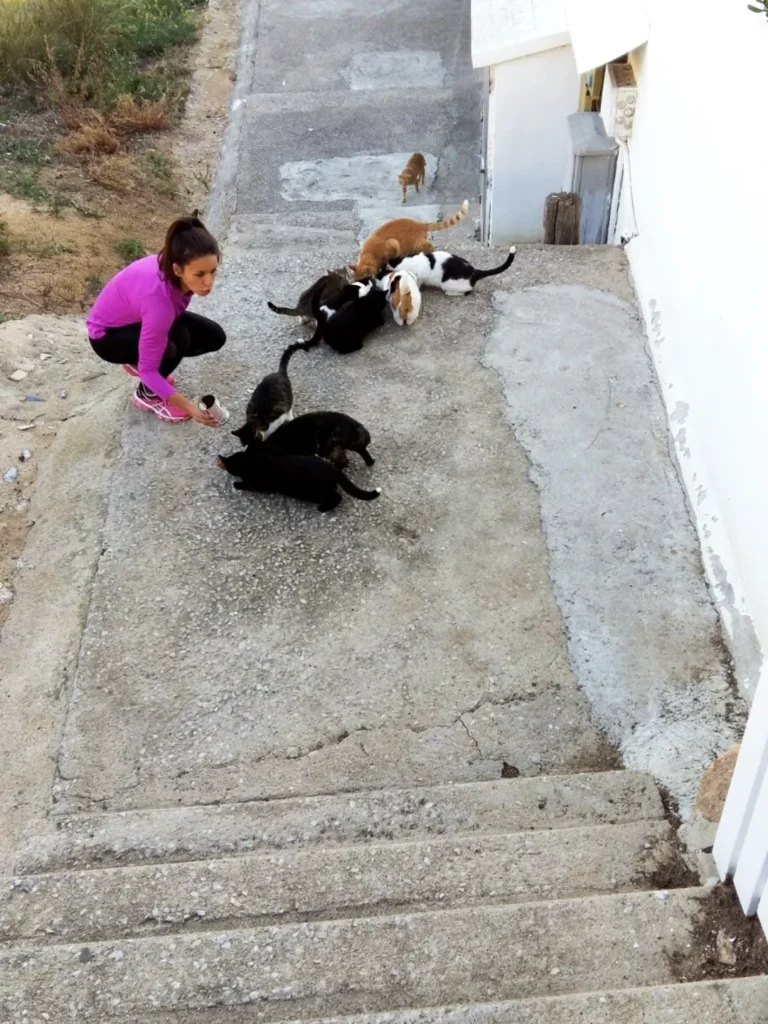
Cases such as the Cala de Sant Francesc development in Blanes (Girona), resolved in just 5 years, and now that of Camp Roig, in Sant Just Desvern (Barcelona), demonstrate that definitive closure is possible. These colonies have not disappeared through traumatic measures or forced relocations, but through their natural extinction, the result of decades of invisible, constant, and responsible work.
A triumph of persistence and legality
This milestone at Camp Roig is the final point of a pioneering trajectory, being the first colony recognized by the Barcelona Provincial Council. Behind it are specific names, such as the volunteer Antonia Regalado, the technical and emotional support of the SOS Gats i Gossos Association and, above all, a conscious administration that has opted to implement the only internationally recognized method to resolve a situation that is often erroneously labeled as problematic.
As a professional who advises on the protection of community cats, these cases provide us with fundamental lessons:
-
The effectiveness of the TNR method: Systematic sterilization is the only endorsed way to control the population without compromising animal welfare. Camp Roig and others are its direct legacy and proof that, by reducing the population in a stable manner, we also protect the balance of the ecosystem and urban wildlife.
-
Legal certainty and biodiversity: This success is supported by a robust regulatory framework that makes Law 7/2023 on animal protection and Law 42/2007 on Natural Heritage and Biodiversity compatible. The legal recognition of the community cat allows caregivers to move from invisibility to becoming public health agents and collaborators in environmental protection.
-
Management based on technical criteria: Following the Technical Guideline of the General Directorate for Animal Rights, it has been demonstrated that a managed colony reduces coexistence conflicts, improves the municipality’s health standards, and minimizes the predatory impact on other native species.
Looking toward the future
The case of Camp Roig is not an anecdote; it is the reference model. It shows us that ethical management is a long-term investment that benefits the entire community: from humans to the other animals that are part of this ecosystem called Earth. Closing a colony naturally means that we have fulfilled our duty of protection and public responsibility, putting an end to the cycle of abandonment at that point in the territory.
Correctly managing our community cats is, in essence, a sign of civic duty and respect for current legality.