I advise administrations on adapting their regulations to legal obligations while optimizing available resources.
I advise administrations on adapting their regulations to legal obligations while optimizing available resources.
Adapting to rights and duties
The current landscape for public management is clear: animal protection has ceased to be a political choice and has become a high-level legal obligation. From European directives and international treaties to recent national legislation —such as Law 7/2023 in Spain—, institutions are required to maintain constant regulatory updates, solid protocols, and well-founded technical decisions.
The challenge is not only to comply with the law, but to do so with legal certainty, regulatory consistency, and budgetary efficiency.
As a lawyer and economist, I advise public administrations at local, regional, and international levels on the design and implementation of animal welfare policies. My approach is eminently strategic: anticipating legal risks, avoiding appeals, and optimizing available public resources to transform legal obligations into excellence in public management.

Legal certainty
In matters of animal welfare, municipal decisions are no longer limited to the political or technical sphere. They operate in the legal sphere. A poorly drafted ordinance, an imprecise tender, or an action without regulatory coverage can lead to appeals, precautionary suspensions, or financial liability.
Legal certainty is not an abstract value: it is the guarantee that every decision adopted by the administration is defensible, consistent, and in accordance with the law.
Prevention of litigation and appeals
The current regulatory framework —with Law 7/2023 and current regional regulations— increases the technical requirements for municipal texts and administrative actions.
Specialized advice allows for:
Detecting regulatory inconsistencies before their approval
Correcting defects in form, procedure, or competence that could invalidate administrative acts
Anticipating scenarios for administrative litigation appeals
Reducing the risk of precautionary suspensions
Anticipating conflict is more efficient than defending it in court.
Regulatory consistency and technical shielding
A public animal protection policy must be consistent across all its instruments to be effective. A lack of alignment between different administrative documents generates legal uncertainty and vulnerability to appeals.
A comprehensive review ensures that all instruments speak the same regulatory language and respond to a unified legal criterion:
- Municipal ordinances (regulatory framework).
- Regulatory bases and grant agreements.
- Specifications for the procurement of services.
- Technical and police action protocols.
Technical shielding consists of ensuring that the entire administrative architecture of the municipality functions as a seamless mechanism.
Reduction of reputational risk
Conflicts regarding animal protection have a high media impact and great social sensitivity. A poorly founded administrative decision can quickly lead to an institutional reputation crisis.
Legal certainty and technical rigor protect the institution against:
- Appeals from entities, groups, or individuals.
- Coexistence conflicts with neighborhood groups.
- Nullity of sanctioning procedures due to investigative defects.
- Insecurity in police actions due to a lack of adequate protocols.
A legally sound action not only guarantees animal welfare but also minimizes the institution’s exposure and strain.
Financial security and expenditure oversight
Incorrect administrative or economic management of grants, service contracts, or TNR (Trap-Neuter-Return) programs can lead to serious consequences for the entity:
- Repayment of funds and loss of grants due to defects in form or justification.
- Notes of unfeasibility or observations in oversight reports and audits.
- Accounting and financial liability before external control bodies.
A preventive approach ensures that public spending on animal welfare is justifiable, efficient, and fully compliant with the law.
Certainty in decision-making
The role of specialized advice is not only to correct errors but to facilitate solid and courageous decision-making. When a decision is well-founded, the Administration acts with firmness, confidence, and transparency.
What does our intervention provide?
- Opinions and Technical Reports: Preparation of legal documents with clear, rigorous, and updated criteria that provide legal certainty to administrative actions.
- Impact and Risk Assessment: Economic and legal analysis prior to the approval of new measures to minimize exposure to appeals or cost overruns.
- Design of Regulatory Strategies: Creation of roadmaps and progressive ordinances, adapted to the operational and budgetary reality of the municipality.
- Level 2 Technical Support: Highly specialized consultancy for situations of great technical complexity or strong social sensitivity.
- Efficiency in Public Spending: Optimization of resources through planning that avoids unnecessary litigation and duplication, turning external contracting into net savings for the public treasury.
Areas of intervention
Drafting and updating of ordinances
Adaptation of municipal regulations to new state and European legal frameworks under criteria of technical rigor and operational feasibility.
I perform a comprehensive review and drafting of ordinances to guarantee:
- Regulatory alignment with Law 7/2023, regional regulations, and current European regulations.
- Legal shielding against challenges and administrative appeals.
- Delimitation of powers, ensuring that the ordinance respects the local body’s framework of action.
- Management of feline colonies: Integration of the legal framework for community cats, TNR protocols, and citizen co-responsibility.
- Updated sanctioning regime: Clear definition of infractions and penalties to avoid the nullity of procedures.

Community Cat Management (TNR)
Comprehensive design and implementation of TNR programs aligned with regional protocols and the state legal framework, ensuring the professionalization of management.
- Preliminary population studies and technical diagnosis: Analysis of the municipality’s reality for planning based on data, not assumptions.
- Identification and registration protocols: Establishment of technical criteria for the official census and health control of colonies.
- Management of neighborhood conflicts: Application of mediation tools and cleaning and feeding protocols to ensure citizen coexistence.
- Legally justified relocations: Advice on the exceptional cases provided for by law, ensuring that every move is motivated and legally protected.
- Coordination with collaborating entities: Professionalization of volunteering through collaboration agreements and clear definition of responsibilities.
- Monitoring and evaluation of results: Control of the program’s impact to ensure its effectiveness and the optimization of public spending.
The goal is to avoid improvisation and ensure that the program is legally defensible and budgetarily sustainable.

Strategic management of financing and grants
Securing funds and managing them with technical rigor is as important as the execution of the project itself. An error in the initial phase can lead to the loss of aid or the nullity of acts.
- Securing external financing: Advice on applying for supra-municipal, state, and European funds (Next Generation, European directives).
- Design of regulatory bases: Preparation of regulations for the granting of aid under principles of legal certainty and objectivity.
- Guarantee of competition and transparency: Shielding of procedures to ensure compliance with the General Law on Subsidies.
- Expenditure control and justification: Support in oversight to ensure that every euro invested is auditable and in accordance with the law.
- Prevention of liability: Proactive management to avoid challenges from third parties or repayment orders from control bodies.
A deficient regulatory base is an institutional vulnerability; good planning protects the Administration and secures the investment.

Tenders and public procurement
Design of specifications with legally sound criteria and balanced economic formulas to guarantee the best service provision and the security of the procedure.
Comprehensive preparation and review of specifications (Administrative and Technical) for:
- Animal collection and transport services: Definition of welfare protocols during the service.
- Management of reception centers and shelters: Establishment of ratios, care standards, and health control.
- Veterinary and clinical services: Definition of the scope of benefits and emergencies.
- Population management programs (TNR): Tendering of sterilization and colony control services.
The goal is to minimize the risk of Special Appeals in procurement matters and ensure an award based on objective, demanding technical criteria aligned with current regulations.

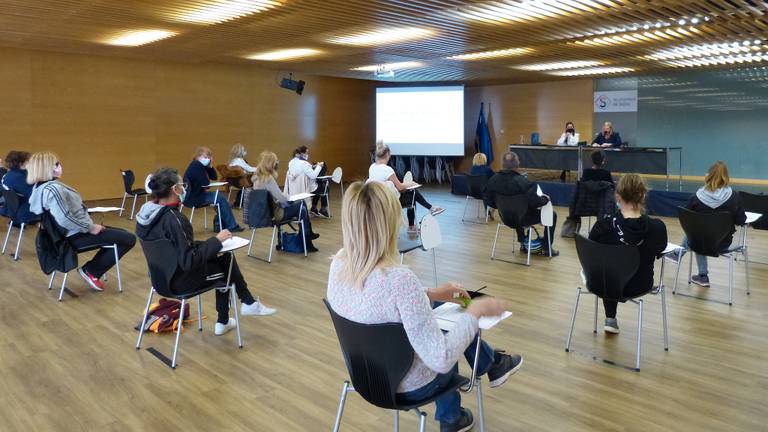
Training for Local Police and municipal technicians
Specialized training is the key tool to reduce litigation and ensure that animal welfare policies are executed with rigor and legal certainty.
I offer operational seminars and workshops on:
- Intervention in cases of abuse: Legal framework, detection of signs, and immediate action protocols.
- Instruction of the sanctioning file: How to guarantee the chain of custody of evidence and avoid the nullity of actions.
- Competencies and regulatory framework: Clarification of municipal vs. supra-municipal attributions according to the new Law 7/2023.
- Drafting of reports and complaint records: Techniques for preparing documents with the legal solidity necessary to withstand administrative and litigation appeals.
- Police management of feline colonies: Specific training on the protection of community cats and mediation in citizen conflicts.
Good training reinforces the confidence of agents and technicians, minimizes defects in form, and provides the Administration with an effective response.

International strategic consultancy
I advise governments, international organizations, and foreign public institutions on the transformation of their legal and operational animal welfare frameworks.
- Knowledge transfer: Analysis of the Spanish and Catalan models as benchmarks in the transition towards “zero sacrifice” and comprehensive protection.
- Convergence with European Union standards: Technical guide for regulatory harmonization according to European directives and international animal welfare treaties.
- Comparative regulatory design: Preparation of legal frameworks adapted to the socio-economic reality of each region, under criteria of legal certainty and animal rights.
- Implementation of population management policies: Design of national birth control programs and sustainable and scalable TNR methods.
- Impact and feasibility analysis: Economic and social studies to ensure that regulations are applicable and generate real changes in the territory.
The goal is to support institutions in creating cutting-edge public policies that are ethical, legal, and economically viable.